






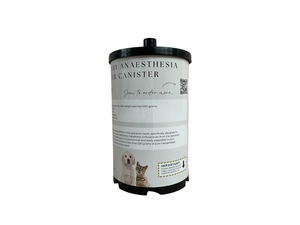
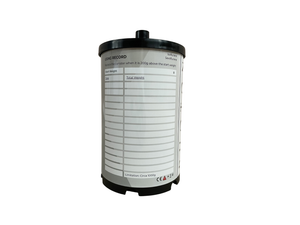
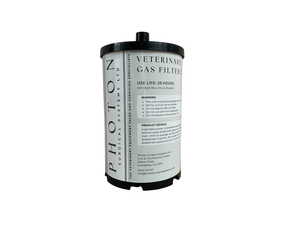
The waste gas canister is designed to safely absorb organic anaesthetic gases, such as halothane and isoflurane - from the expiratory limb of a veterinary anaesthetic circuit. Filled with activated carbon, it prevents harmful waste gases from entering the working environment. Because nitrous oxide is not absorbed, this method is unsuitable for systems using N₂O. The canister must be weighed regularly to ensure it is replaced before saturation, as a saturated canister will no longer absorb gases.
How the Canister Functions
Connected directly to the scavenging tubing from the patient circuit’s expiratory (scavenge) valve, the canister traps organic vapours as they pass through the charcoal bed. Once the charcoal reaches its absorption limit, waste gases will bypass the medium and be released into the room, making monitoring essential for staff safety.
Key Features
-
22 mm male inlet — standard connection for direct attachment to scavenging tubing.
-
Activated carbon filling — absorbs up to 800 g of organic anaesthetic agents.
-
Not suitable for N₂O — nitrous oxide is not absorbed by charcoal.
-
Approx. 28 hours of constant-use capacity — varies with gas flow and concentration.
-
Controlled incineration disposal — required once saturated.
-
Sold individually, as a pack of 6 or 10.